The Fijian Singing Silktails won hearts around the world with their serenades during Covid19. With their new focus on youth they are building an ecosystem that one day will deliver NRL ready prospects
JUN 14, 2026
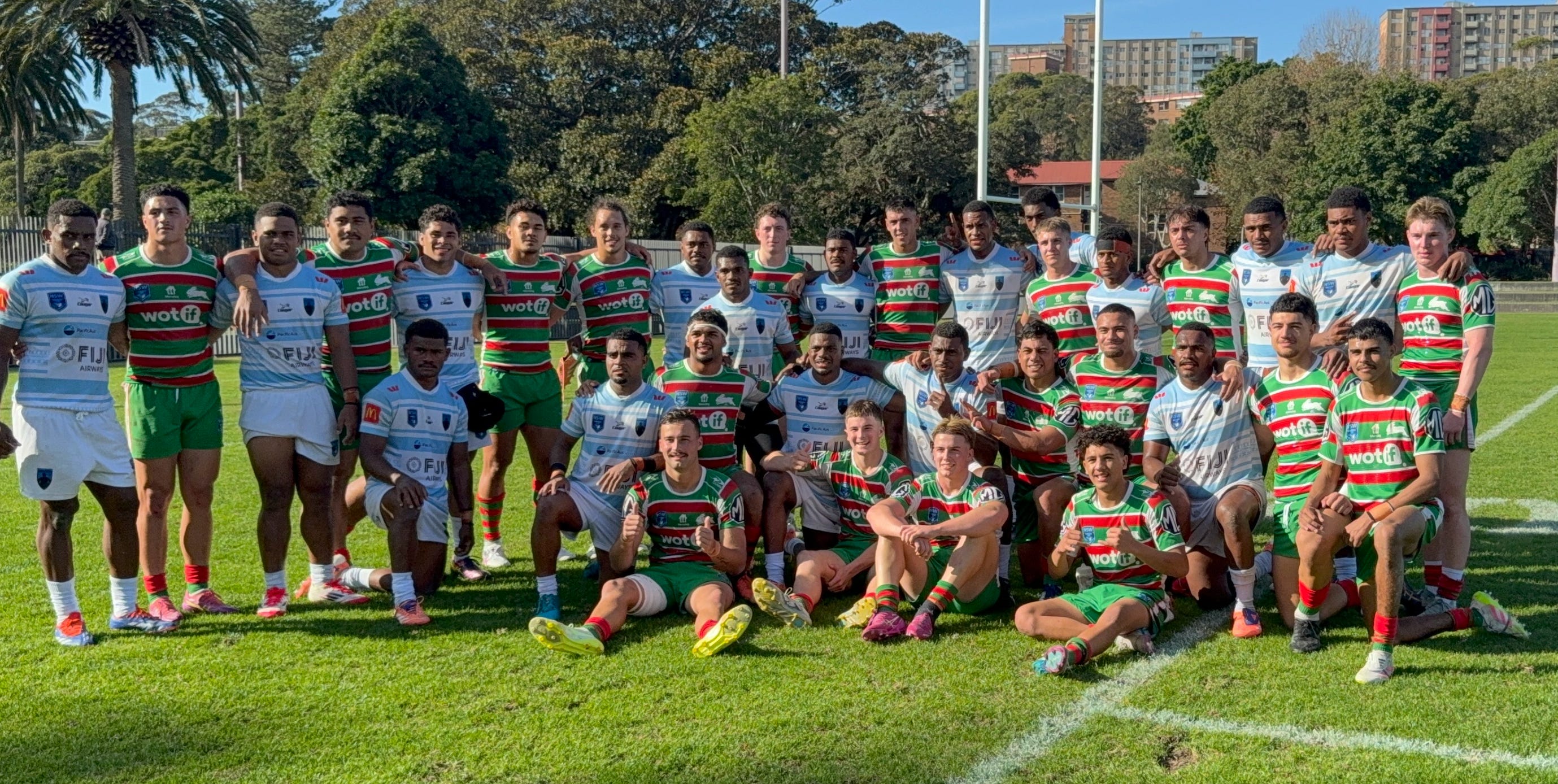
On a glorious Saturday afternoon at Redfern Oval, a man who drove three hours to be here is watching a team he helped will into existence get outplayed by the club that once made his name.
Manoa Thompson was the first Fijian heritage player to pull on a South Sydney Rabbitohs jersey, making his debut for them in 1989 and scoring 29 tries across 61 first grade games.
He was an early patron of the Kaiviti Silktails, the Fijian rugby league club that’s building foundational pathways for the long, long journey to becoming an NRL team.
On this afternoon the two halves of Manoa’s life have folded together. The Silktails and Souths Under-21 Jersey Flegg teams are playing for the inaugural Manoa Thompson Bowl, and the pioneer himself is here to hand it over to the winners.
It’s not a great day for his Fijian side as the Silktails are conceding tries against Souths’ relentless attack. It’s disappointing for the Fijians in attendance, coming just a week after the high of beating the Sydney Roosters 18-12 at Churchill Park.
* * *
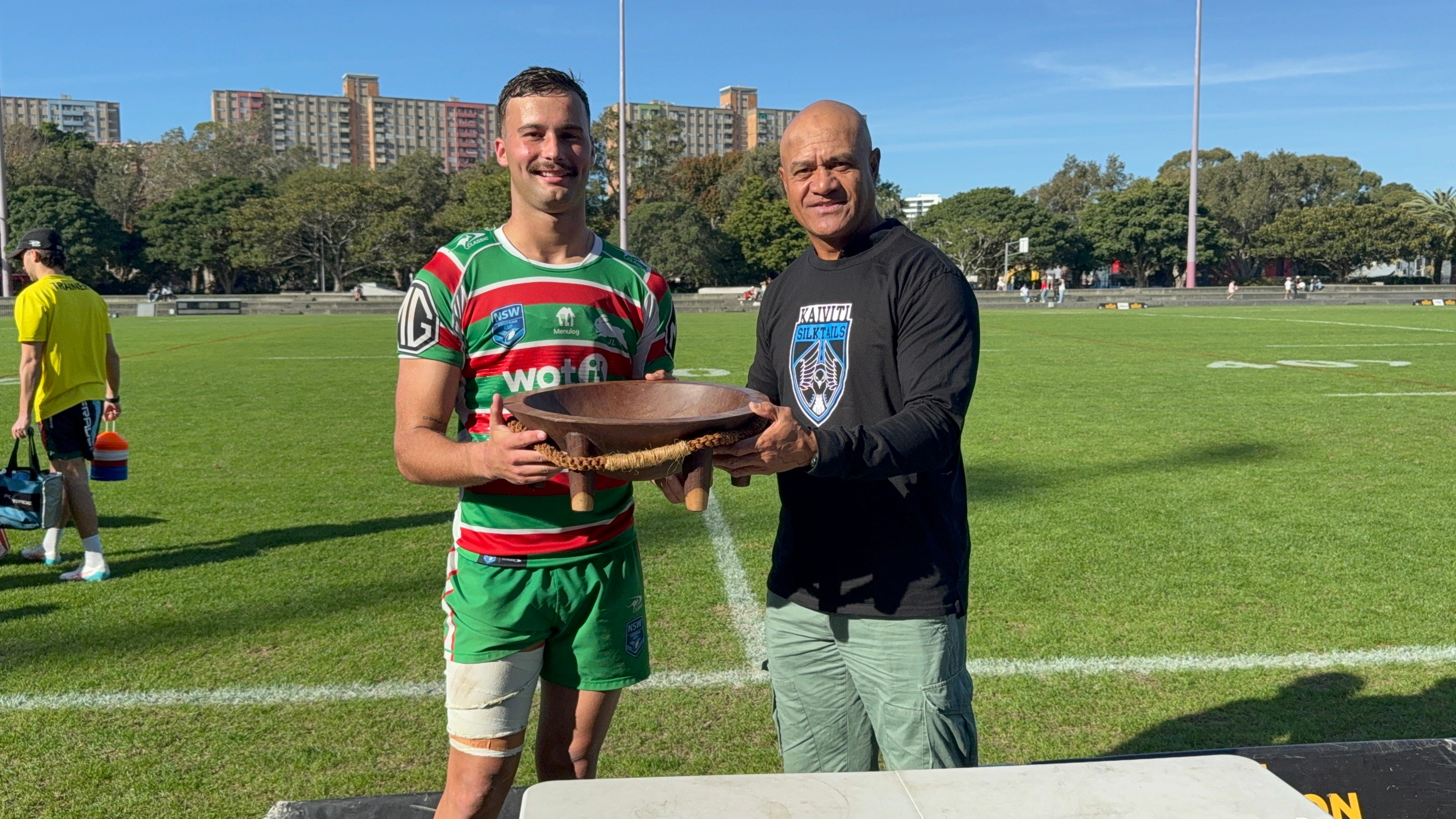
Manoa is in a reflective mood. To be recognised as a pioneer, by both his cultural club and his old playing club on the same afternoon brings a smile to his face.
“It’s a great honour, just to get that recognition for playing the game,” he says. “It wasn’t easy coming through as a Fijian but thankfully now it’s different.”
His one regret about the Manoa Thompson Bowl (a big wooden kava bowl) is purely aesthetic.
“I just wish we could get some kava and fill that bowl up,” he grins.
“It looks very empty and lonely.”
Thompson belongs to a Fijian rugby league pioneer lineage the Silktails are deliberately keeping warm.
He has his Bowl; Apisai Toga, St George’s late Fijian trailblazer has his when the Silktails play St George; Canberra Fijian legend Noa Nadruku has a bowl dedicated to him when the Silktails contest with Canberra; Petero Civoniceva has one too when the Silktails play the Penrith Panthers.
The club understands instinctively that it walks in the footsteps of Fijian giants who have opened the pathway and delivered the Silktails the opportunity.
* * *
Of the various Bowls the Silktails are establishing with Jersey Flegg clubs, the Apisai Toga Bowl is the most poignant.
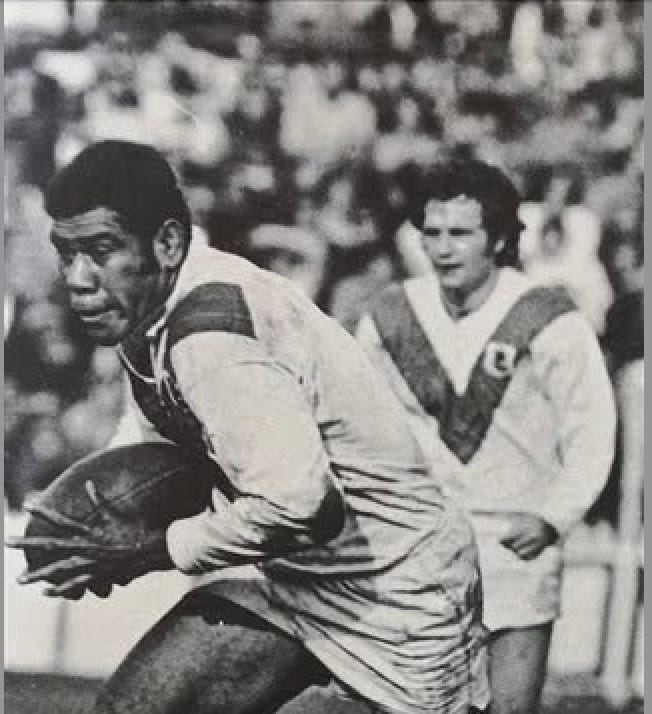
Apisai ‘Harpie’ Toga was the first Fijian to play professionally in Australia, making his debut in 1968 for the St George Dragons.
He went on to play 65 first grade games but his career was cut tragically short in 1973 when he died from tetanus after a coral cut sustained swimming in Fiji in the off season.
Apisai was a larger than life, popular player, famed for his smile and known for guitar playing and singing in the local hotels after matches.
He’s been largely forgotten in rugby league folklore but not by the Fijians.
There’s a pleasing symmetry: the Silktails’ first-ever Jersey Flegg win, back in 2025, came against Toga’s old club the Dragons – a 23-22 thriller in Nadi.
* * *
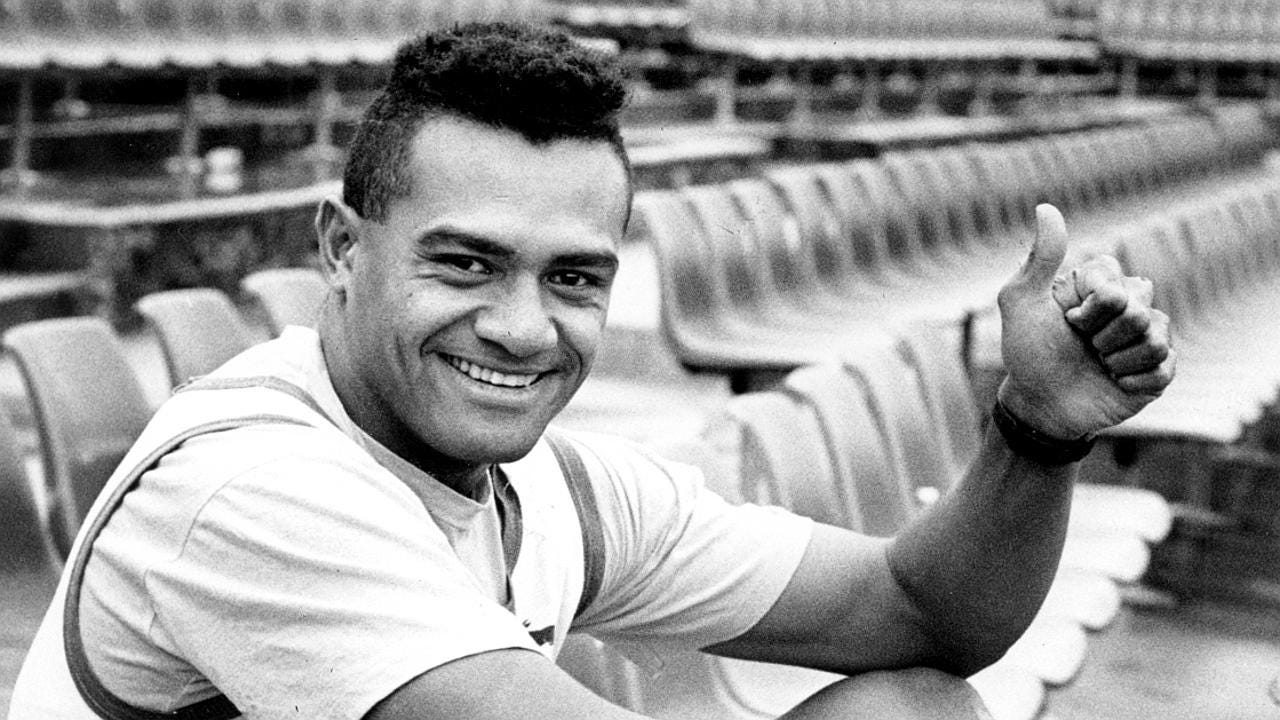
Asked where Fijian rugby league sits now, Manoa Thompson is circumspect.
“Still very early stages,” he says.
“But it’s good for the players to come over to Australia and get a taste of the real thing. What we need is to get them younger, and to have them consistently playing with good players. That’s the extra step.”
He watched the Silktails surrender too much possession against a sharper Souths outfit and his diagnosis is the simplest and oldest in the code.
“They’ve just got to hold the ball. The fitness is there, the physicality is there. But you’re not in any game if you’ve only got twenty per cent of the ball.”
His message to Silktails fans is shorter still.
“Stay faithful,” he says. “Stay with the journey.”
* * *
To understand why an ambitious Fijian rugby league club remains so positive while losing games of under-21 football to NRL nurseries, you have to understand the bet the Silktails made at the end of 2023.
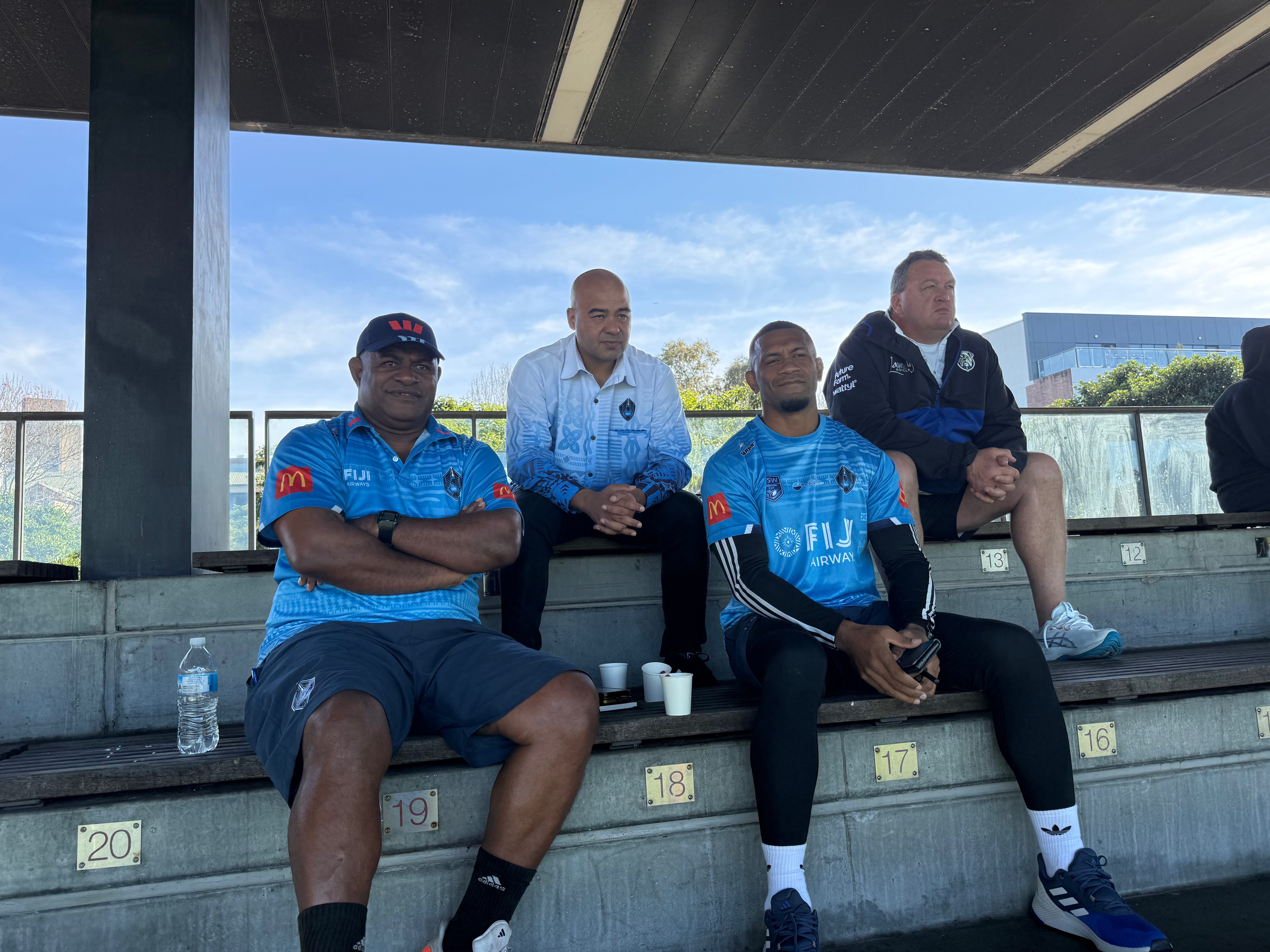
Silktails Chief Executive and former Fiji Bati strength and conditioning coach Stephen Driscoll is sitting in the stands at the top of Redfern Oval with a frown. He would have loved a different result today but he is building something that transcends the immediate results and ladder standings.
Fiji-born and raised in Australia from the age of three, Driscoll was there at the beginning of the Silktails and is unsentimental about the club’s change in focus towards younger players.
For three seasons, from 2021 to 2023, the Silktails played in the Ron Massey Cup, a semi-professional competition of grown men, effectively the third division in Sydney behind the NRL and the NSW Cup.
They were competitive but Driscoll could see a hole in the pipeline.
“The Ron Massey Cup only went for sixteen weeks and was only in Sydney,” he explains.
“And we’d identified that the kids leaving rugby league after secondary school were just going back to rugby union. There was no pathway to capture them. So we wanted to create something that would catch them”
“Offer them twenty-six weeks playing in an Australian competition – the famous Jersey Flegg Cup against young players in NRL systems.”
So the Silktails restructured.
In 2024, the Silktails dropped their previous mature-age model, entered the NSWRL’s under-21 Jersey Flegg Cup, and went chasing teenage talent instead of mature players.
The second part of playing in the Jersey Flegg Under-21s comp was equally important. Jersey Flegg is where the young prospects of NRL clubs live – every Sydney team, plus Melbourne, the Warriors, the Raiders.
“Moving to Jersey Flegg gave us a chance to bring those NRL brands to Fiji,” Driscoll says.
“The fans in Fiji are excited to see the next generation of NRL talent, there’s more visibility for our sponsors, more reach into the cities where our Fijian communities are. And it gets us playing right across Australia and in New Zealand.”
A three-year deal with the City of Gold Coast now bookends each pre-season, with annual trials against the Titans and the Dolphins.
However, Driscoll and his team knew the standard of rugby league in Jersey Flegg was always going to be brutal.
The Silktails 2.0 arrived with no junior representative scaffolding beneath them – no SG Ball, no Harold Matthews, none of the elite pathway comps the Australian kids have grown up inside, most from the age of 12.
In year one of their participation in Jersey Flegg, the Silktails lost every game and finished on zero points.
“It was a tough year,” Driscoll concedes.
“But even with no wins, we captured the hearts and minds of those teams by how we treated them.”
Last year they climbed to fourteen points.
This year, the win column already reads three including a breakthrough victory over the Canberra Raiders and wins against Manly and the Roosters.
Its tough going for the Silktails against a well drilled Souths outfit. Consistency and reducing mistakes is crucial for improving their results according to Manoa Thompson.
“We’re definitely more competitive,” he says. “We’re getting there.”
But to hear Driscoll tell it, the win-loss column is the least interesting ledger the club keeps. They are in the business of building better people and the Silktails live up to that creed, running a strict “no work, no study, no play” policy.
They have strict compliance rules which incentivises the teenage prospects to think beyond rugby league into careers and tertiary courses.
The Silktails are, he says, “the college footy program of the Pacific.”
“Everyone who comes into our program, I tell them the same thing,” he says.
“Not everyone here is going to be an NRL player – maybe one or two at best. But everybody can have a better life because of this.”
He turns the usual logic of a development club on its head: the floor, not the ceiling, is the point. The very worst that can happen, he says, is that a boy goes home with a trade, an education and a better life than the one he arrived with.
That framing matters, because of who is walking into the gym every day.
A 2024 survey of the squad of 35 found that around two-thirds of the players had grown up without a mother or father in their lives, raised instead by grandparents and extended family.
“We have players who are raised by their grandparents because parents divorce or are overseas working to get money for the family,” Driscoll says quietly.
“We literally become their second family.”
* * *
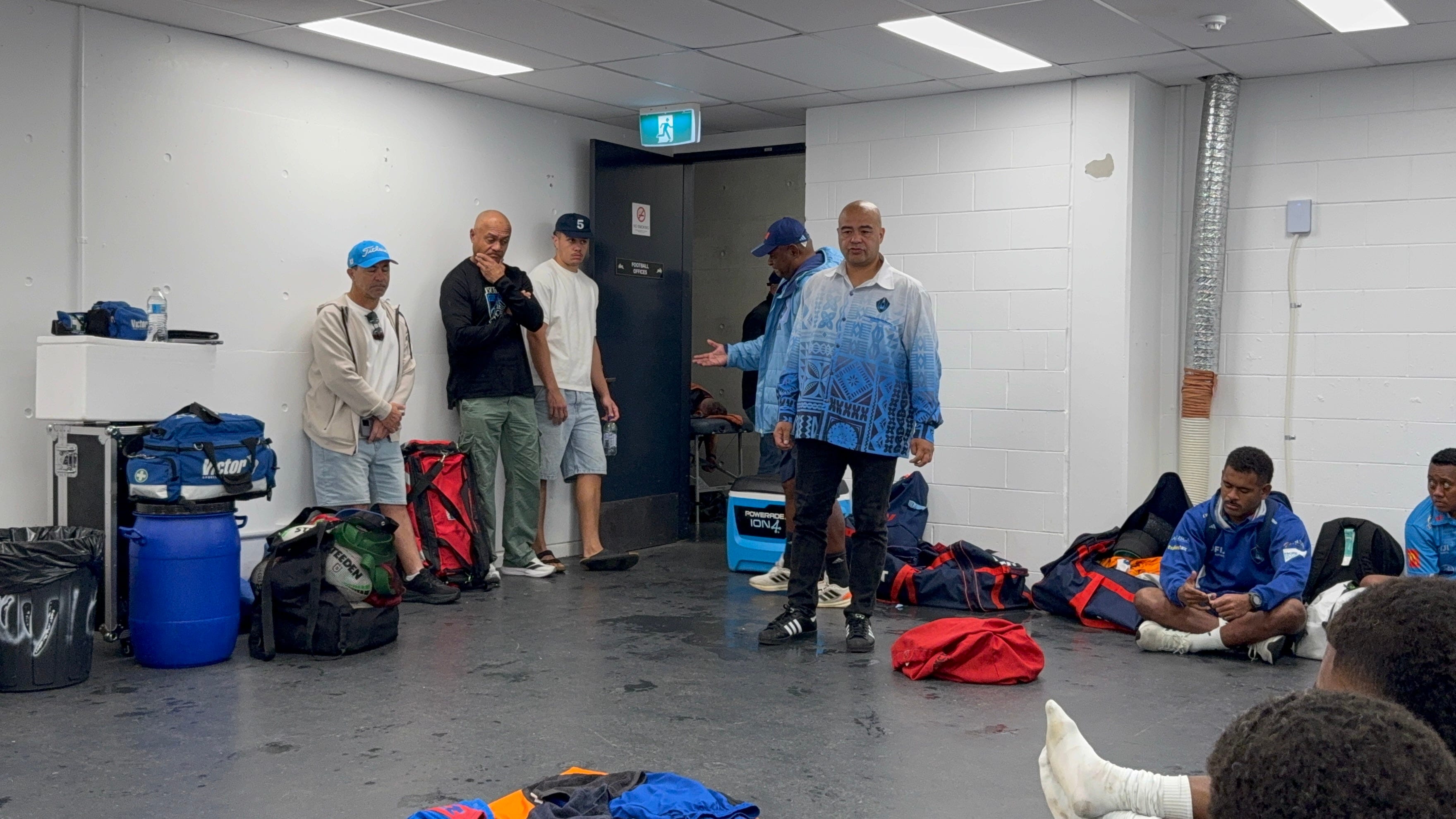
Silktails coach Master Duve speaks to the team after the South Sydney loss.
If Driscoll is the architect, the man laying the foundational bricks is head coach Timoce Duve – “Master Duve” to everyone in the camp, a nod to three decades spent as a secondary school teacher in Fiji. He is in his second year in the job, and his students are now a Jersey Flegg side.
“It’s a big jump, from secondary school footy to Jersey Flegg for our players,” he says after the Souths loss.
“We look for people who have a high work ethic, and that connection between the players and the club. Those are the things we recruit for.”
Most of his recruits are converts from another sport. “Most of them are rugby union players,” he says,
“so it’s a big learning curve to fast-track them.”
Some of his players will line up against future NRL stars having played a dozen or so games of league in their lives, against opponents who have played hundreds.
The miracle, to Duve, is that they keep turning up.
“The physicality is there, the fitness is there. It’s a massive opportunity for these kids, mostly from the village – to travel on a plane, to come to Sydney, Melbourne, Canberra, Auckland.”
His daily paradox is grappling with how to harness the trait Fijians are famous for. Flair is what the world loves about Fijian rugby sevens players , but flair needs to be managed and balanced in the structured world of Australian rugby league.
“That’s the biggest challenge we have,” he admits.
“Getting the boys to complete sets, to be more structured rather than the free-flowing rugby style we sometimes fall back into – and then we lose possession in the first or second tackle.”
“It’s a mindset we’ve had to change. Completions are important in rugby league. Get our completions right early, and then, towards the back end of the game, maybe we can throw the ball around.”
Hold the ball first. Earn the right to entertain later. It is a hard sermon to preach to the most instinctively expansive footballers on earth, but Duve preaches patience to the fans as well.
“We’re building,” he says.
“Once we get that pathway through the lower age-group teams, things will get much faster for us.”
That pathway is the thing he and Driscoll both circle back to, again and again, like a mantra they will manifest into being.
“If we can get a Harold Matthews team and an SG Ball team for our under-17 and under-19 boys” Duve explains.
“we will be very, very competitive with the NRL clubs. Get them at fifteen or sixteen, teach them the fundamentals, and it all goes well.”
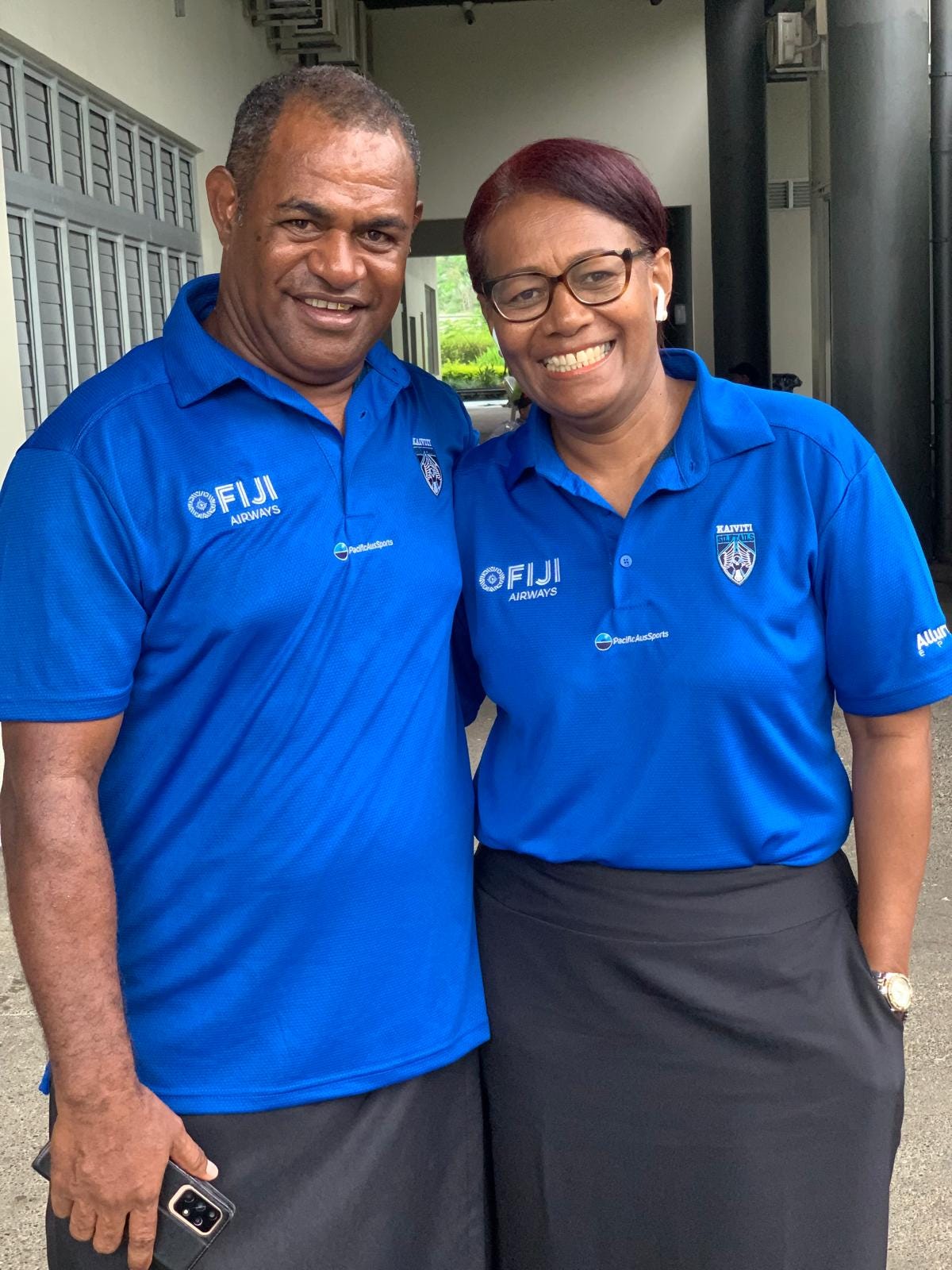
For Master Duve the Fijian raw material is there in bulk.
Around 120 secondary schools now play rugby league in Fiji.
“League is on the rise, not just in Fiji but across the Pacific,” Duve says.
“The problem has always been the pathway from there. We’re thankful the Silktails give these young men somewhere to go.”
[Part 1 ends]
